
How Majestic Ridge leveraged dementia-friendly design: lighting, layout, colors, safety features, and a welcoming environment supporting dignity and independence.

Why Dementia-friendly Design Matters in Memory Care
At Majestic Ridge, we believe that environment shapes quality of life. The spaces where residents spend their days—the lighting, colors, layout, and furnishings—aren’t decorative choices. They’re therapeutic choices. Dementia-friendly design choices create a memory care community that reduces anxiety, supports independence, and allows residents to move through their days with confidence rather than fear. This is why we designed every detail of Majestic Ridge intentionally, from the moment a family walks through the door to the layout of a resident’s bedroom.
Understanding How Dementia Affects Perception
Dementia changes how the brain processes the world. Vision, spatial awareness, and sensory input all work differently. Understanding these changes is the foundation of good design.
Vision Changes in Dementia
As dementia progresses, residents lose the ability to distinguish between similar colors—blues and greens blend together, and grays become invisible. Depth perception deteriorates, making stairs, shadows, and changes in flooring feel threatening. Glare from windows or shiny floors can be disorienting or painful. At Majestic Ridge, we’re addressing these changes head-on. High-contrast colors between walls, floors, and fixtures help residents see where they’re going. Warm, muted tones create a calming atmosphere. Lighting is carefully planned to eliminate glare while providing clarity. When a resident can see their environment clearly, they move through it with confidence.
Spatial Disorientation
One of the most distressing aspects of dementia is getting lost. A resident steps out of their room, takes a few turns down a hallway, and suddenly has no idea where they are or how to get back. This fear can trigger agitation, wandering, and a desperate need to leave the building. Good design prevents this. Familiar landmarks—distinctive artwork, plants, architectural details, even the color of a hallway—create mental anchors. Clear sightlines let staff keep watch without residents feeling confined. At Majestic Ridge, every hallway has visual cues to help residents orient themselves and find their way home.
Sensory Sensitivity
Dementia also heightens sensory sensitivity. A loud noise that might startle anyone can send a resident with dementia into genuine distress. Harsh fluorescent lighting causes agitation. Strong smells—chemical cleaners, perfume, cooking odors—can be overwhelming. At the same time, familiar sensory experiences—soft textures, gentle music, the smell of home cooking—are deeply calming. Our design creates spaces where sensory input feels manageable and even comforting, not assaultive.
Our Design Principles
Everything we’ve built at Majestic Ridge rests on four core principles:
- Simplicity. Clutter confuses. Too many choices overwhelm. We’ve designed spaces with visual simplicity in mind—fewer distractions, clearer pathways, less cognitive load. When a resident looks around their room or down a hallway, they see only what matters.
- Familiarity. A memory care community should feel like a home, not a medical facility. Furniture is residential, not clinical. Common areas look like living rooms, not waiting rooms. We’ve eliminated the institutional aesthetic entirely—no sterile corridors, no medical equipment visible, no signs that scream “facility.”
- Accessibility. Both physical and cognitive. Residents should be able to move through their environment independently, safely, and without confusion. Doors open easily. Bathrooms are accessible. Pathways are clear. Nothing requires a staff member’s help to navigate.
- Safety. Security without feeling like confinement. Residents can move freely within Majestic Ridge, but they cannot wander into danger. Our secure outdoor garden is an example—residents can enjoy fresh air and nature safely.
How We’re Putting These Principles Into Practice
Lighting That Supports Natural Rhythms
Natural light during the day helps maintain healthy circadian rhythms and can improve sleep quality at night. During the day, residents will have access to abundant natural light through large windows. In the evenings, we shift to warm, dim lighting that mimics sunset—supporting the body’s natural wind-down. We’ve eliminated harsh fluorescent lighting entirely. Every fixture has been chosen to provide clarity without glare, warmth without harshness. The goal is lighting that feels natural and supportive, not clinical.
Colors & Contrast for Clarity
Color choices aren’t aesthetic—they’re functional. High contrast between walls, floors, and fixtures helps residents with vision changes see their environment clearly. A dark handrail against a light wall is easier to spot than a handrail that blends in. Warm, muted tones—soft greens, warm grays, gentle blues—create a calming atmosphere without the anxiety-inducing quality of stark white or cold institutional beige. We’ve also used color strategically for wayfinding: a hallway leading to activities might have warm tones, while another area might have subtle color shifts to help residents orient themselves. Consistency matters too—the same color scheme flows throughout, so residents don’t feel like they’ve stepped into a different world when they move from one area to another.
Layout & Wayfinding
The floor plan at Majestic Ridge is intentionally designed to support independence and safety. We’ve avoided long, confusing corridors. Instead, the layout limits rooms to only 3 or 4 in any direction, so residents can wander safely, explore, and still find their way home. Distinctive landmarks—a particular piece of artwork, a flowering plant, architectural details—serve as visual anchors. Staff can monitor residents without creating the feeling of being watched. Decision points are marked clearly with subtle visual cues: lighting, color shifts, or meaningful objects that signal “this way to the garden” or “this leads to the dining room.” The result is a space where residents can move with agency, not anxiety.
Resident Rooms
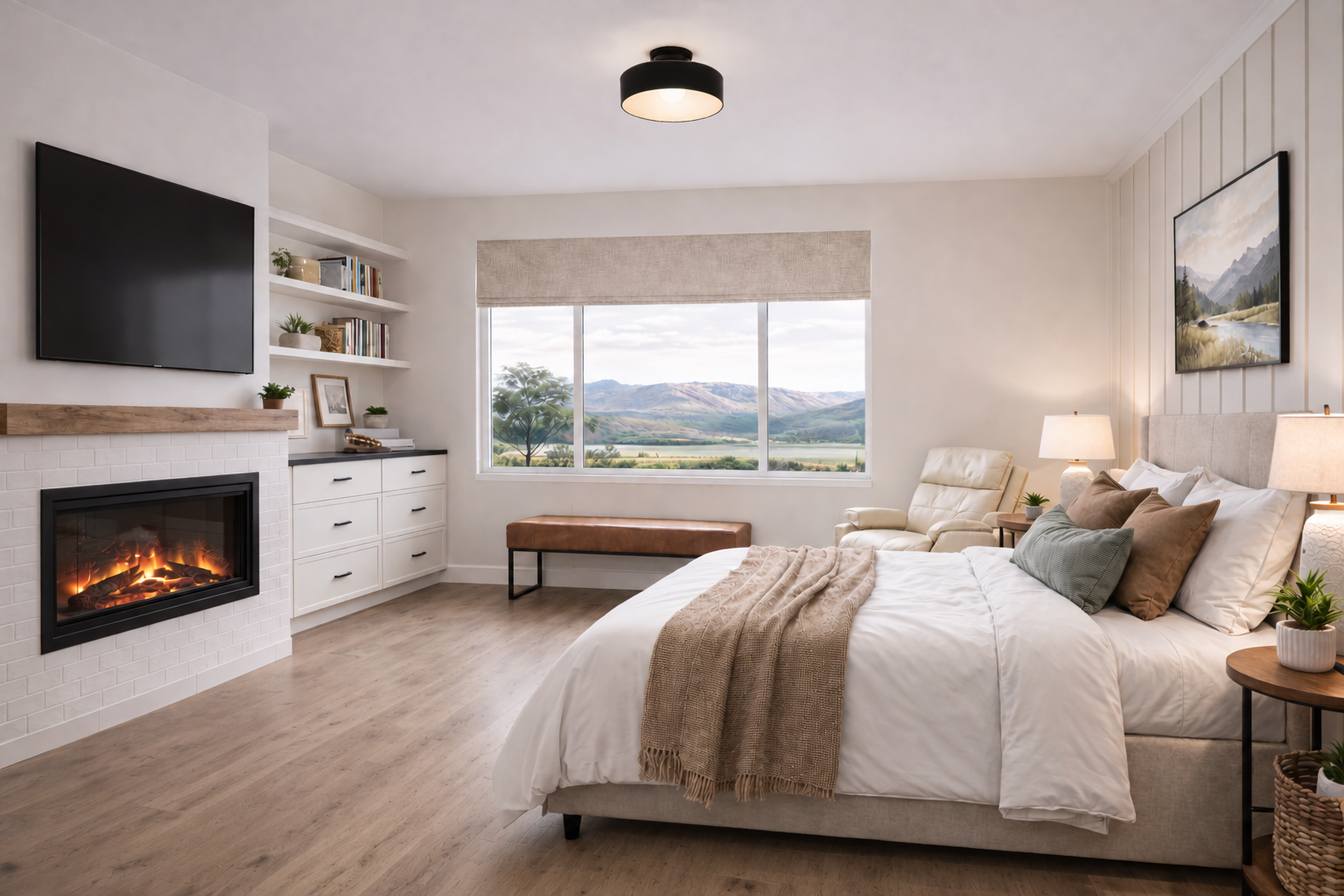
A bedroom should feel like a bedroom, not a hospital room. At Majestic Ridge, resident rooms are furnished with residential furniture—not medical-looking beds, but real bedroom furniture that feels familiar and comforting. Large windows provide views of the outdoors, reducing the institutional feeling of confinement. Bathrooms are fully accessible, with grab bars and roll-in showers designed for safety, not sterility. Lever handles (easier to operate than round knobs) and temperature controls (residents often feel temperature differently as they age) are standard. Most importantly, residents can bring personal items—photos, cherished objects, familiar furniture—to make the space truly theirs. A room decorated with a lifetime of memories is a home, not a room in a facility.
Common Areas & Social Spaces
Community spaces at Majestic Ridge are designed for connection and comfort. The secure outdoor garden allows residents to enjoy fresh air, nature, and the simple pleasure of being outside—safely. Activity areas are clearly marked and accessible, with furniture arranged to encourage both socialization and quiet time. The dining space feels residential, with real tables and home-cooked meals served from our open kitchen, not an institutional cafeteria. We’ve created multiple gathering spaces: some designed for quiet reflection or one-on-one connection, others for group activities and social engagement. Every space has purpose, and every space feels like part of a home.
The Design Process Behind Our Community
We didn’t make these decisions lightly or in isolation. Our design process includes collaboration with healthcare consultants, geriatric professionals, and dementia care experts to ensure every square foot of our future home will serve a meaningful purpose. Every color, every layout decision, every fixture—it’s all grounded in evidence about how dementia affects perception and how good design supports wellbeing. This wasn’t about creating something beautiful. It was about creating something that works—that supports residents in maintaining dignity, independence, and quality of life.
Creating a True Home
A building can meet every design standard and still feel cold. What makes Majestic Ridge different is that behind every decision is a commitment to the people who’ll live here. Our design doesn’t just meet codes or follow best practices. It honors the fact that these are people with full lives, full histories, and full dignity—people who deserve an environment that reflects that.
When a resident walks into Majestic Ridge, they should feel safe. When a family member visits, they should feel like they’re entering a home, not an institution. When staff go to work, they should work in spaces designed to support both residents and the people caring for them. That’s what designing for dignity means.
Ultimately, our goal is to build an environment where residents feel safe, empowered, and respected. A place where they can move confidently, feel comforted by their surroundings, and live each day with purpose and peace. While we have not yet opened our doors, every design decision we make is driven by this vision.
At Majestic Ridge, we believe design is a form of care. It’s how we will meet residents where they are, honor their journey, and support them in living with dignity. This is the standard we are setting—and we look forward to bringing it to life.


Comments
Peggy Budnick
Love it!